Showing posts with label Australia. Show all posts

Wednesday, March 25, 2009

Iron ore terminals

The biggest iron ore terminals in the world:
The biggest and most efficient iron ore terminal in the world is situated in Qingdao port in China. 50 million tonnes of iron ore are passing here each year. And yet Huangdao accounts for just one-sixteenth of China's total iron ore use. That seems quite logical if you consider that each year China builds high-rise apartments for 19 million new urban migrants, produces 8.5 million cars, completes 17 major city airports and rolls out tens of thousands of kilometres of railways, tunnels, bridges and elevated highways. In the same Chinese province (Shandong) the Iron terminal of Rizhao port is situated. Rizhao port is one of the biggest iron ore import ports in China. In the picture below you can see the giant iron ore terminal in this port which is the second biggest in the world:


Another major terminal is the iron ore terminal of Sao Luis port in Brazil. This facility has the largest linear loader in the world (16,000 tph capacity) capable of loading the largest bulk carriers. After Brazil Australia is the biggest export country of Iron ore. In Port Hedland in Australia a huge iron ore terminal is situated which is for sure among the biggest in the world:


And in Dampier there is another huge terminal. To be precise 2 terminals; here and here at the Intercourse Island, off Dampier. This view below shows the iron ore stockpiles, ship-loading jetty and port control tower on Intercourse island:


Most of the Iron ore of this terminal is coming from the Tom Price iron mine 320km inland

Read more...

Wednesday, March 4, 2009

Bauxite mines

Bauxite mines:
Bauxite is used to make aluminium. First the Alumina is refined from Buaxite in an alumina refinery After the Alumina is refined from bauxite the aluminium is extracted from its oxide alumina in an aluminium smelter.

The biggest Bauxite mine is the Huntly mine located near Dwellingup in Australia. Huntly bauxite production has doubled since 1990 and currently produces around 23 million tonnes of bauxite per year. This mine is supplying bauxite ore to Pinjarra and Kwinana Refineries. To transport the Bauxite to the refinery it uses an overland convejor of more then 20 km in length:
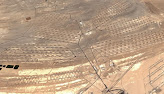


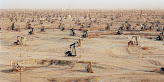
At the end of the lines the Bauxite is stored at the refinery bauxite storage side. An even longer conveyor belt is going from this Bauxite mine to the bauxite refinery in Worsley. It is fifthy two kilometers long and is the longest conveyor belt in the world. The worlds second biggest bauxite mine is located near the town of Trombetas in Brazil. This mine transports the bauxite to the nearby bauxite bulk terminal:

Read more...

Saturday, February 28, 2009

Alumina refineries

Alumina refineries:
Alumina, or aluminium oxide is refined from bauxite in a caustic soda/high temperature process. Caustic solution is used to dissolve the alumina, which is settled out, filtered and heated to evaporate the water. The resulting fine white granular substance is then smelted in so called aluminium smelters.

The biggest alumina refinery in the world has opened in 2008 in the northern Brazilian town of Barcarena. The refinery provides seven percent of global aluminum production, with an annual output of 6.26 million tons. In the picture below you can see the plant when it was under construction:


Most of the other big alumina refineries in the world are located in Australia (Which is among the biggest pruducers of aluminium in the world). This alumina refinery in Pinjarra in Western Australia with an Annual production of 4.2 million tons is the world's second biggest. The waste ( red mud) coming from the factory is pumped into a giant disposal site where it is stored. This red mud is not a hazardous waste and can be disposed of in an environ-mentally neutral manner. In the pictures below you can see such red mud disposal sites from a aluminium refinery in Ukraine:


The third biggest in the world is the
Queensland alumina limited refinery located in Queensland Australia. It has a capacity of 3.95 million tons a year:


In Gove in Northern Territory in Australia this alumina refinery is located with a producion of 3.6 million tonnes. This refinery also has it giant disposal sites. The bauxite itself which is used in the refinery is mined here and brought to the refinery by pipe lines.

Among the ten biggest in the world are also this refinery in Worsley in Australia with an anual production of 3.5 milllion tonnes, this one in Weiqiao in China (2.5 million tonnes), this one in Wagerup in Australia ( 2.4 million tonnes ), this refinery in Point Comfort in Texas (2.3 million tonnes and the biggest of the U.S ):


and the Paraman alumina factory in Suriname ( 2.2 million tonnes ).

Read more...

Wednesday, February 4, 2009

Diamond mines

Largest Diamond mines:

The richest mine in the world is found in Jwaneng in Botswana about 100 miles west of the city of Gaborono. It is the richest diamond mine in the world when measured by value of recovered diamonds:


When measured by the volume of the diamond production the Argyle diamond mine in the Kimberley region in Western Australia is the biggest. Due to the low proportion of gem-quality diamonds, is not the leader by value:


South Africa's Venetia Diamond Mine located in Limpopo Province, in north-easter South Africa is the third largest in the world. The Venetia diamond mineproduces over 40% of the world's gem-quality diamonds:


The Catoca diamond mine is the fourth largest diamond mine in the world, and is located in Northern Angola:


A very spectacular diamond mine is located in Mirny in Russia. This mine was one of the biggest in the world but is not in production anymore since 2004. The mine is 525 m deep and has a diameter of 1,200 m:


Another special diamond mine is the Diavik diamond mine located 300 kilometers northeast of Yellowknife, capital of Canada’s Northwest Territories. This mine is situated in a very remote area often totally frozen and very hard to reach. It also has it own airport to serve the mine:


In the winter the mine is hard to reach due to snowfall and ice:

Read more...

Saturday, January 31, 2009

Aluminium smelters

Aluminium production:
Aluminium smelting is the process of extracting aluminium from its oxide alumina. Alumina is extracted from the ore Bauxite at an alumina refinery. The process of extracting aluminium from Alumina is an electrolytic process, so an aluminium smelter uses prodigious amounts of electricity. They tend to be located very close to large power stations, often hydro-electric ones, and near large alumina refineries where the alumina is produced. Others are situated along ports since a lot of them use imported alumina.


Largest Aluminium smelters:
Bratsk aluminium smelter is the largest producer of primary aluminium in the world. The smelter accounts for 30% of aluminium production in Russia and 4% of the world’s output. In 2007, it produced 995,000 tonnes of primary aluminium. This smelter is near the Bratks hydro elektric power station and uses a lot of the power coming from it. Russia also has the second largest smelter in the world located in Krasnoyarsk. The facility produced 989,000 tonnes of primary aluminium in 2007. The smelter accounts for 27% of aluminium production in Russia and for 3% of global output. It is located in the vicinity of the Krasnoyarsk Hydropower Plant and consumes approximately 70% of its energy. The pictures below were made in one of the Krasnoyarsk 26, 600 meters long, smelting
"halls":


With a capacity of 872.000 tons of aluminium the factory in Manama in Bahrain is the world third biggest. The Hillside Aluminium factory in Richards Bay in South Africa has a capacity of 675.00 tons of aluminium per year and is therefore currently the fourth biggest in the world:

Aluminerie Alouette is the America’s largest aluminum smelter,and ranking fifth internationally. It is located in Sept-Iles in Canada and has a capacity of 572.000 million tonnes per year:


Among the biggest in the world are also the Boyne island smelter in Australia with a capacity of 545.000 tonnes per year, this smelter in Maputo in Mozambique with a production of 530.000 tonnes per year, this one in Australia in Tomago with a capacity of 520.000 tonnes per year. And this one in Tursunzoda in Tadsjikistan with also a capacity of 520.000 tonnes per year. You might wonder why China, which is the biggest producer of aluminium in the world, doesn't have a smelter among the biggest in the world. This is because china has a lot of smelters but none of them has a capacity of more then 400.000 tonnes per year. Their biggest is situated in Qingtongxia with a production of 385.000 per year. Although this may change very soon because China is planning a huge smelter in the city of Gganhzhou. Europe's biggest is in Sunndal in Norway with a capacity of 328,800 tonnes per year:


The biggest in the US is this smelter in
Evansville in Indiana with a capacity of 309.000 tonnes per year.

Read more...
Blog Widget by LinkWithin

  © Blogger templates ProBlogger Template by Ourblogtemplates.com 2008

Back to TOP